
The complete guide
Choosing and Using a Orange Tulle Fabric Roll
A lighter way to finish handmade decorations
Some projects need a finishing layer without a heavy fabric covering everything beneath it. A gift bow may need more volume. A bouquet may need a soft outer wrap. Party favours might look a little bare, even though the packaging already does its job.
Orange tulle offers a sheer finish for these kinds of details. Its open net structure allows the background to remain visible, while folds and gathers add shape. You can use a small amount for a light accent or build up layers for a fuller look.
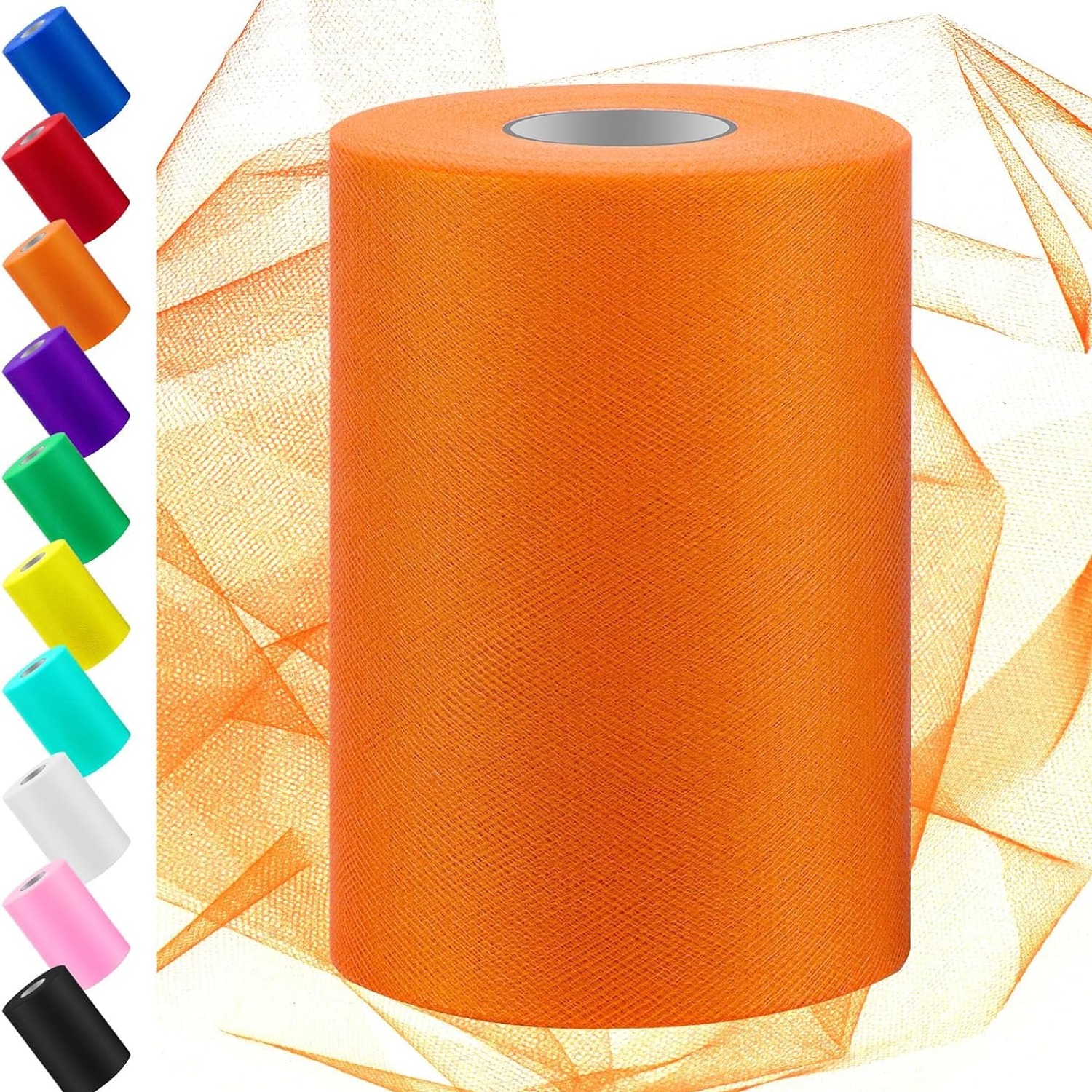
This tulle fabric roll is supplied as one continuous piece, 6 inches wide and 100 yards long. That narrow format is worth noting. It is suited to strips, wraps and repeated craft details, not the same jobs as a wide sheet of fabric.
Before choosing it, think about the shape you need to cover and how much of the background you want to see.
What this roll gives you
The supplied specifications describe orange polyester tulle with a solid pattern and a net weave. The total length is 100 yards, also listed as 91.44 metres. The roll is described as continuous, without splice marks, so you can choose the length of each piece.
A long roll can be helpful when a project involves repeated decorations. You might need bows for several gifts or matching wraps for a set of party favours. Instead of cutting strips from a wide panel, you can measure along the roll and keep its existing width.
The 6-inch width also sets a clear limit. If your idea calls for a broad backdrop or a full fabric panel, check whether a narrow roll will create the finish you have in mind. Joining pieces may change the appearance and add work.
For small decorative pieces, however, starting with a narrow tulle roll can make planning more straightforward.
How sheer netting changes with layers
Tulle does not cover a surface in the same way as a closely woven fabric. Light and background colour show through its openings. A single layer can look subtle, especially when it sits over a darker surface.
The maker recommends extra layers for stronger colour coverage. Folding the fabric back over itself puts more netting in the same area, creating a fuller orange effect. Gathering it into a bow or ruffle also concentrates the fabric.
Try this before you cut a large batch. Place one layer on your chosen background, then fold it to compare the result. Check it from the distance at which people will actually see the decoration.
This matters for layered tulle decorations on tables, gifts and event furniture. A piece that looks full in your hands may appear much lighter when spread out. The right number of layers depends on the result you want, rather than a fixed rule.
Who this fabric suits
This roll is worth considering if you make gift bows, floral details, party decorations or tutu components. The listed uses include weddings, baby showers, Christmas crafts and graduation events.
It can also suit a beginner who wants to try a small decorative project. A simple wrap gives you a chance to see how the mesh folds and gathers before you commit to a larger design.
For someone making many matching pieces, a sample is especially useful. Once you settle on a length and method, you can repeat that choice across the rest of the project.
It is less suited to a task that needs opaque coverage or one wide, uninterrupted sheet. Nor should you assume it meets a safety standard for a venue or specialist use. Certifications are not specified by the maker, so check any required documentation before ordering.
Choose by width before total length
A generous length can catch your attention, but width is often the first measurement that decides whether fabric will work.
For a bow, ask how wide you want the loops to appear. For bouquet wrapping fabric, consider how far the wrap needs to extend around the flowers. For a gathered skirt component, follow the pattern rather than guessing from the roll size.
You can test the width with a strip of paper before buying. Cut the paper to 6 inches wide and hold it against the object you plan to decorate. It will not behave like tulle, but it can help you spot a size mismatch.
If you need a broad covering, compare wider fabric options. If you need repeated narrow strips, the roll format may be a better fit. Make that choice before working out the total quantity.
Work out your quantity with a sample
The most useful estimate starts with one finished piece.
Make your sample in the style you plan to repeat. Measure the fabric used, including any tails or overlap. Then multiply that length by the number of finished pieces you need.
Allow extra for practice cuts and changes. Layering also needs to be part of the calculation from the start. If you decide later that each piece needs twice as much fabric, the original estimate will no longer help.
For tulle for tutu skirts, use the instructions from your chosen pattern. Strip length, waist size and fullness all affect the amount needed. The roll length alone cannot tell you how many finished skirts it will make.
Using tulle for gifts and floral crafts
Gift wrapping tulle works as a decorative outer layer. It can add gathered detail around a wrapped present or form a bow without hiding the packaging completely.
Start with the item already contained or wrapped as needed. Then test how the tulle sits around it. Keep enough length for the closure, and avoid cutting all your pieces until the first one looks right.
The same approach helps with tulle for floral crafts. Try a small section around the bouquet and check the balance between visible stems, flowers and netting. The fabric is not described as waterproof, so do not depend on it to contain moisture.
For party favours, remember that open netting does not securely contain every type of filling. Small contents may need a separate bag or box. Food should have suitable packaging rather than relying on the tulle itself.
Planning decorations for an event
When choosing tulle for wedding decorations or other events, make one example in the actual setting if you can. Background colour and viewing distance can change how sheer orange fabric looks.
Check how the decoration will attach, too. A bow that holds well on a gift box may need a different method on a chair or display. Test your chosen fastening without assuming the netting will support weight.
Keep fabric out of walkways and away from heat sources. For baby shower tulle, use it as decoration and keep loose lengths and ties out of babies' reach.
If the event has a fixed date, check delivery information before you order. Leave yourself time to inspect the roll, test the design and prepare the finished pieces without rushing.
Cutting and assembling your pieces
Give yourself a clear, flat work area before unrolling the fabric. Netting can be hard to judge when it is bunched up, so lay out the section you need before measuring.
Cut one piece first and use it to finish a full sample. This catches problems that a length measurement alone may miss, such as short bow tails or too little overlap.
Once the sample works, keep it nearby as a reference. Compare new pieces with it as you go, especially if you are making a large set of matching decorations.
When using polyester tulle ribbon with other materials, test the whole design together. Your fastening method needs to suit every part of the piece. Avoid assuming that plain fabric care instructions also apply to added trims, adhesives or supports.
Washing, reuse and storage
The supplied care instructions allow a cold machine wash on a delicate cycle and low-heat machine drying. Those instructions describe the fabric, not every possible finished craft.
Before washing a decoration, check what else it contains. Remove attachments where practical, and consider whether glue, wire or other materials need different care. A piece made for one event may be easier to reuse if its parts can be separated.
Reusable tulle fabric is most useful when it is stored carefully between projects. Let it dry fully, then roll or fold it without forcing it into a crowded space. Keep it away from sharp tools and exposed fasteners that could catch the mesh.
Save usable offcuts for smaller bows or trial pieces. A short leftover length can help you test a new idea without cutting into the remaining roll.
The short version
Choose this orange tulle fabric roll when your project calls for narrow, sheer polyester netting that you can cut and layer. Its stated size is 6 inches by 100 yards, with one continuous roll supplied.
Check the width first, make a sample and include every layer in your quantity estimate. For bows, gift details and small event decorations, that little bit of planning can help you get the finish you want with fewer wasted cuts.