


The complete guide
How to Choose and Fit Cambric Dust Cover Fabric
A torn panel beneath a sofa can look worse than the repair job really is. Loose cloth hangs down, the frame shows, and bits of the underside become visible whenever you move the furniture. If the seat and frame are still sound, the problem may be limited to the bottom cover.
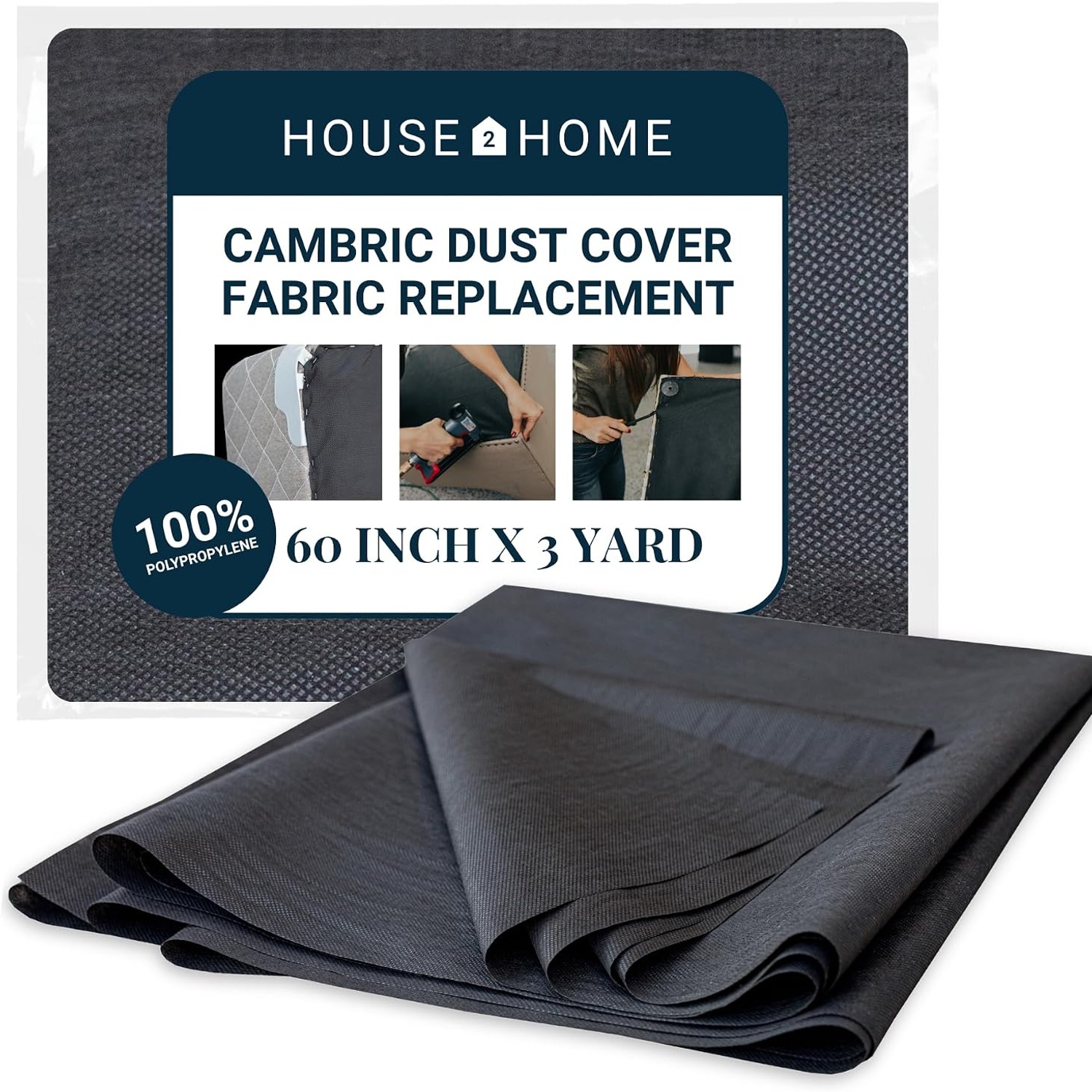
Cambric dust cover fabric is made for that finishing job. It closes off the underside with a light layer of cloth, rather than replacing the upholstery you sit on. This piece is black non-woven polypropylene, measuring 152.4 cm wide by 274.32 cm long.
Before buying, it helps to separate a simple cover replacement from a repair that needs more work. The guide below explains what to check, how to measure and how to approach fitting without asking too much of the fabric.
What an underside cover actually does
Look beneath many upholstered chairs and sofas and you will find a thin cover attached around the frame. Its job is different from the stronger materials above it. It hides internal parts, gives the underside a finished appearance and helps keep dust away from the furniture's interior.
An upholstery underlining fabric is not there to hold a person’s weight. It does not replace webbing, springs, seat fabric or a damaged frame. Pulling it tight beneath a sagging seat will not solve the cause of the sag.
That distinction matters when choosing a repair. If only the bottom cloth is torn, replacing it can be a focused project. If pieces of the frame are loose or the seat feels unstable, deal with those problems first. A neat cover should be the last step, not a way to hide damage.
Understanding this particular fabric
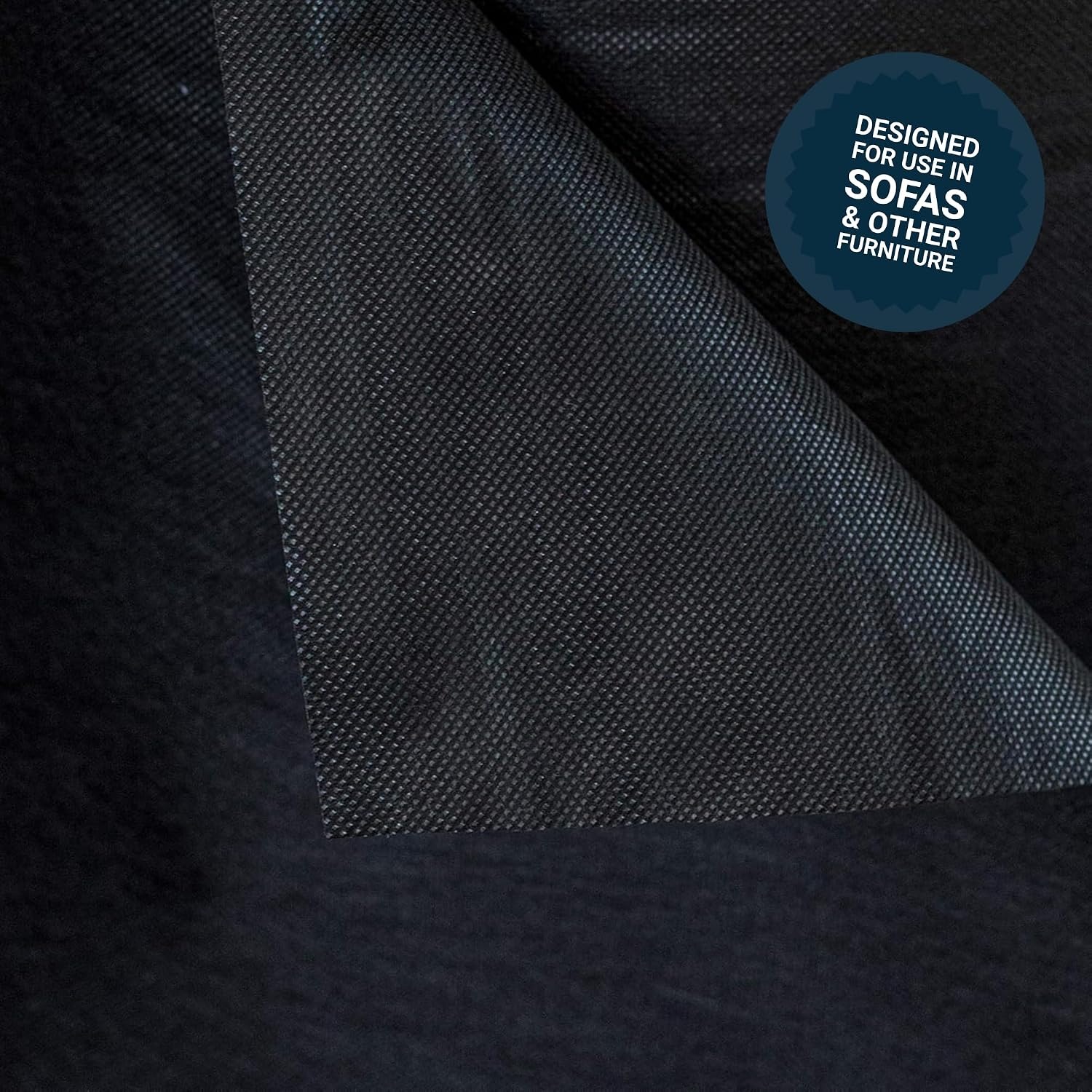
The maker lists this material as non-woven 100% polypropylene, with a fabric weight of 1.2 oz per square yard. It has slight stretch, which can help it sit around corners and curves.
Think of that give as fitting room, not spare fabric. You still need a piece large enough to reach the fixing points without being forced. Excess tension can make a light cover harder to attach neatly and leaves less room to adjust the edges.
The listed item weight is 231 g. The product dimensions also include a height of 0.1 cm, but the most useful measurements for planning are its width and length. Compare those with your actual cutting plan rather than judging coverage from the furniture’s name or style.
Who this repair suits
A sofa dust cover replacement makes sense when the existing cloth is the main problem. Perhaps it has torn during a move, come loose at the edges or started hanging below the frame. Re-covering that opening can restore a tidy underside without changing the visible upholstery.
The same idea applies to chairs, ottomans and suitable box springs. Smaller furniture may need only part of the supplied piece. Whether the remainder will cover another item depends on the shapes and allowances involved.
This is less suitable if you need a fabric for a seat, an outdoor barrier or a protective pet shield. Those jobs call for properties that are not stated by the maker. Choose by the material’s intended role, not just its colour or the word “upholstery.”
Measure the fixing area, not just the opening
Start by finding where the new cover will attach. The open space beneath the furniture may be smaller than the full area the fabric needs to span. You need enough material to reach sound fixing points around the edges.
Measure in both directions and note any corners, feet or brackets that interrupt a straight edge. Add the allowance needed for your chosen attachment and folded edges. There is no single allowance that works for every frame.
The supplied piece is 60 inches wide by 3 yards long. Try your cutting plan in both orientations before deciding it fits. A long sofa may suit one layout while a wider base needs another.
Do not assume a box spring dust cover will fit simply because the maker mentions a bed size. Bases vary, and the attachment area matters. Your own measurements are the useful ones.
Inspect the furniture before covering it
Make sure the furniture can be moved and supported safely before working underneath it. A sofa can be awkward to handle even when it does not look especially large. Ask for help rather than trying to balance it while working.
With the old cover accessible, inspect the visible frame and supports. Look for loose parts, damaged fixing areas or anything that could catch the new cloth. If you find a structural problem, pause the cover replacement.
Take extra care with powered furniture and recliners. The maker mentions recliner use, but the fabric must stay clear of the mechanism. If you cannot identify a safe attachment path, ask an upholsterer or the furniture maker for advice before proceeding.
Plan your cuts before reaching for scissors
Lay out the cloth and check your measurements again. If you are making several smaller covers, sketch their positions first. An early cut in the wrong place can leave enough total material but no piece with the shape you need.
An old cover can help show the general outline, provided it has not stretched or torn beyond recognition. Compare it with the frame instead of treating it as an exact pattern. Missing corners or ragged edges can hide the original attachment allowance.
Keep the first cut generous enough for the fitting plan you have measured. You can trim surplus once you know the cover reaches properly. It is much harder to correct a piece cut too close to the opening.
Fit for smooth coverage, not heavy tension
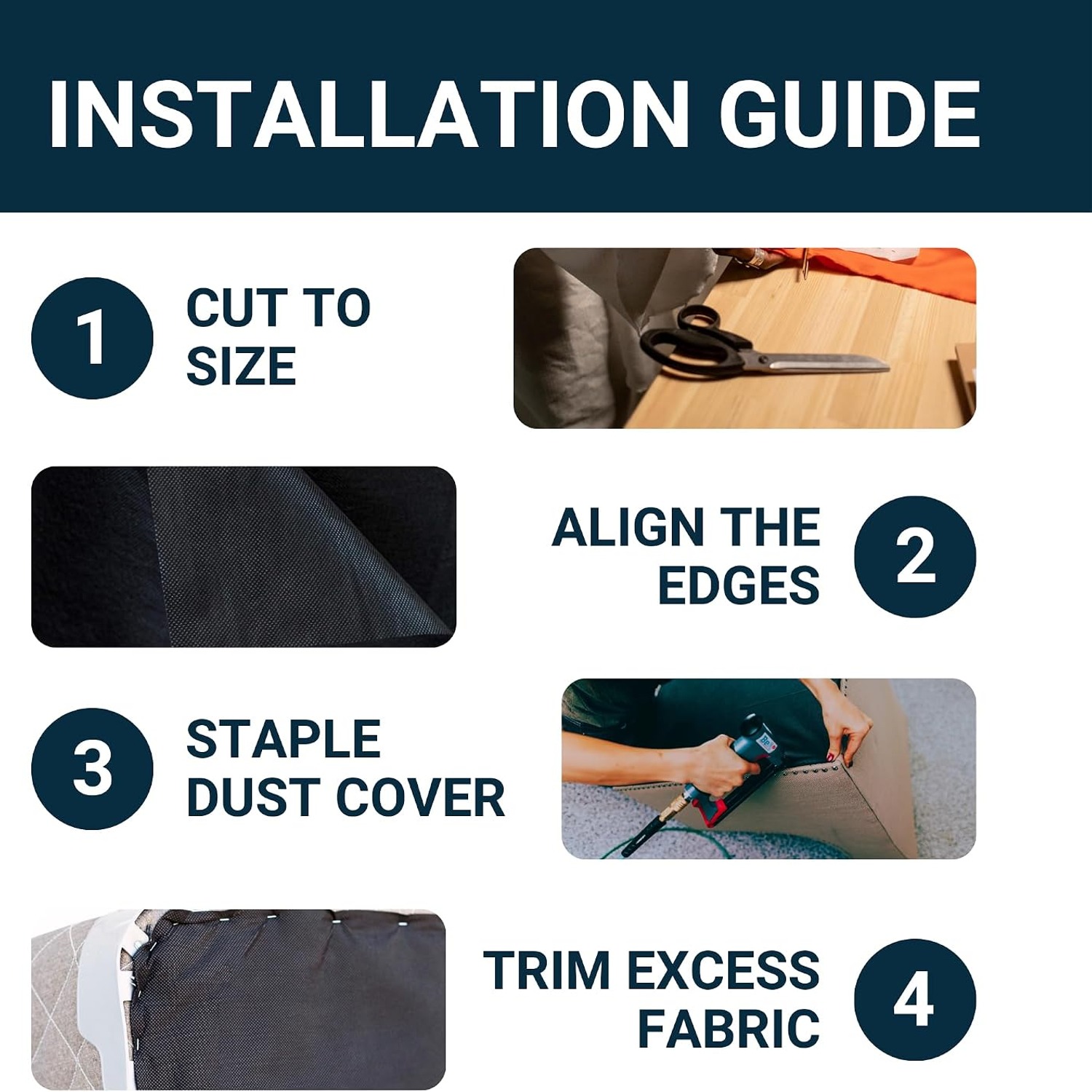
The maker describes this cambric fabric for upholstery as suitable for cutting, folding and stapling. The right staples and tool depend on the frame. The maker does not specify a universal staple size or include a tool list.
Position the cloth before fastening the whole perimeter. Check that it reaches each side and that the edges sit where you intended. Work gradually, adjusting opposite areas so that one side does not pull the whole piece off line.
Aim for an even surface without deep sagging. You do not need to stretch it like a support membrane. Around corners, arrange the excess so it does not form a bulky fold near a foot or fitting.
Before returning the furniture to use, check the attachment points and any nearby moving parts. Remove loose cuttings and keep track of discarded staples throughout the job.
Know the limits of lightweight lining
Black furniture lining can make an underside look finished, but appearance is only part of choosing the right material. A hidden location does not mean every fabric is suitable for every job.
There is no waterproof rating, fire certification or pet-resistance claim in the maker's description. If one of those properties is required, look for material with the relevant documented performance. Do not assume a dust cover will provide it.
The maker also suggests light lining uses around the home, including cabinet bottoms and concealed storage areas. Those uses still need judgement. A cloth lining may hide a view, but it cannot replace a shelf, a solid back or another supporting part.
Care after the repair
Once fitted, avoid catching the underside when lifting or moving the furniture. Use appropriate frame points for handling rather than pulling on the new cover. A little care during a move can prevent another tear.
For routine attention, gently remove surface dust with a soft brush. Do not pull hard at a snag or scrub the fabric as though it were seat upholstery. Washing and drying instructions are not specified, so do not assume the cloth is machine washable.
If the cover starts to sag, inspect the edges before stretching it again. A loose fixing and a torn section need different responses. Checking the cause helps you avoid adding tension where the fabric is already damaged.
Check the order against your project
Before ordering furniture underside fabric, confirm that your plan fits within 152.4 cm by 274.32 cm, including attachment allowances. Check that you need a light finishing cover rather than a stronger repair material.
Review delivery information for your address if the project has a deadline. Read the current returns terms too, particularly before cutting or fitting the cloth.
The short version
This sofa bottom cloth is for covering and tidying furniture undersides. Its black non-woven polypropylene construction and slight stretch suit measured lining projects on appropriate frames.
Check the furniture’s condition, measure the fixing area and leave room for neat edges. If the structure is sound and the dimensions work, replacing the dust cover can be a straightforward final step in caring for a useful piece of furniture.