
The complete guide
A Practical Buying Guide to Black Calico Fabric
A useful starting point for sewing ideas
A sewing project can become expensive before the first seam is finished. Cutting straight into your chosen fabric leaves little room to test a fit, change a pocket or try a new stitch. Black calico offers another starting point. It is listed for dressmaking toiles, sewing practice and a range of finished craft projects.
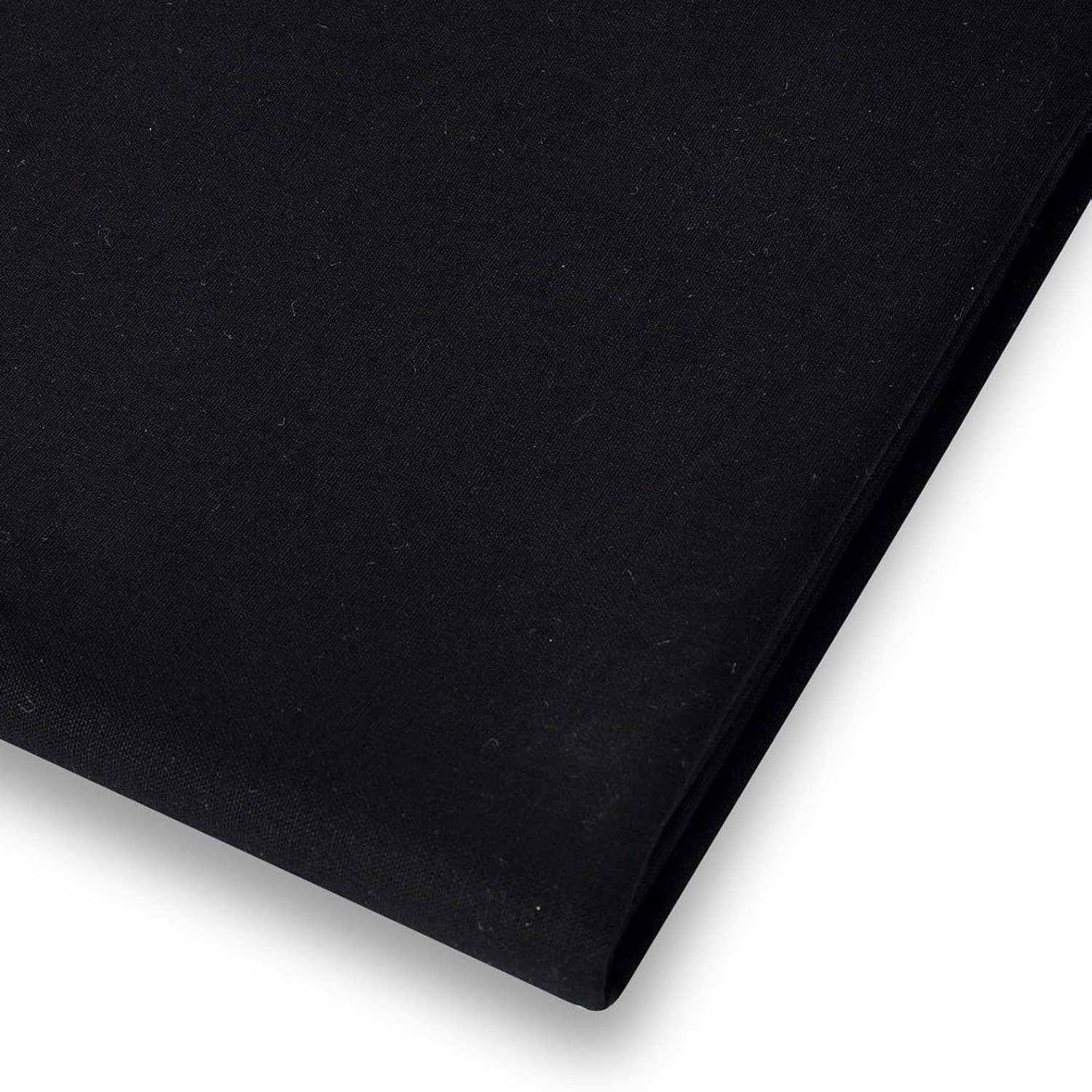
This option is a three-metre pre-cut length of cotton calico. The maker describes a plain weave and a black shade. Suggested uses include quilting, embroidery, curtain linings, pillowcases and totes.
The main buying question is not whether calico has plenty of uses. It is whether this particular cloth matches your project. Measurements, fabric feel and care all matter.
What plain weave means for your project
Plain weave describes a basic fabric structure in which threads cross over and under one another. It gives you a woven cloth rather than the looped structure of a knit. That distinction matters when a sewing pattern asks for a particular fabric type.
This product is listed as 100% cotton. If you are looking for black sewing fabric, that colour can form part of the finished design.
Do not assume all cotton fabrics behave alike. A cotton cloth can vary in thickness, stiffness and surface feel. Those qualities affect how a bag stands, how a curtain hangs and how a garment fits. Handle a sample or ask for more detail if the finished shape depends on a particular drape.
Check the length and width before planning
The product option and unit count identify three metres of fabric. The main dimensions describe a length of 3 m and a width of about 1.47 m. The maker's description also gives a width of 147.5 cm.
Other fields list an item length of 100 cm and display dimensions of 100 × 157 cm. Those figures do not agree.
For a small project, you may have room to adjust your layout. A wide curtain panel or large quilt backing can be much less forgiving.
Remember that this is a pre-cut calico fabric option. Several packs should not be assumed to arrive as one unbroken length. If a design depends on a long continuous panel, settle that point before ordering.
Understand the fabric weight
Fabric weight helps you judge whether a cloth may suit a project, but it does not tell the whole story. The maker describes this product as 150 gsm and medium weight. Another product field calls it lightweight.
That difference is worth keeping in mind when comparing medium weight calico options. Ask for clarification if your pattern specifies a narrow weight range or if you need a particular body in the cloth.
The listed item weight of 0.69 kg is a separate figure. It should not be read as a substitute for gsm, which refers to weight per square metre.
A useful hands-on check is to fold and gather a sample. Look at how it hangs and how bulky several layers become. That can tell you more about a proposed hem, pocket or bag corner than a weight label alone.
Use calico to test a garment pattern
Dressmaking toile fabric gives you a chance to work through fit before using your final cloth. You can check whether a seam sits in the right place, whether a sleeve allows movement or whether a pocket opening feels comfortable.
Start with the parts that affect fit most. A trial version may not need every finishing detail, but it does need the key seams and an accurate cutting layout. Mark changes clearly so you can transfer them back to the pattern.
Calico is not a universal stand-in for every garment fabric. A trial in plain weave cotton will not show exactly how a stretchy knit or a very fluid fabric will behave. Choose a toile cloth that is reasonably close to your final material where possible.
For a beginner, calico for sewing practice can also make each attempt feel more manageable. Keep the offcuts for testing stitch length, seam finishes and buttonholes.
Think through quilting and embroidery needs
Calico fabric for quilting can serve different roles depending on the design. Before deciding where to use it, place it beside the other fabrics. Check the shade, thickness and how the layers feel together.
If the quilt will be washed, test the fabrics first. The maker does not give a shrinkage rate for this calico. Measuring a sample before and after washing helps you judge whether your preparation method needs changing.
Embroidery is another listed use. A black fabric can remain visible around stitching, so consider that background as part of your design rather than an afterthought.
Test embroidery backing fabric with the actual thread and stitches you intend to use. Dense stitching can behave differently from a light outline. Try your hoop tension and any stabiliser on an offcut before working on a larger piece.
Plan useful home and craft projects
The maker lists totes and pillowcases among the possible uses. These projects let you judge the fabric against a clear purpose. A bag needs suitable construction, while a pillowcase needs a feel you enjoy against your skin.
For calico tote bag fabric, think beyond the main panels. Handles, seams and attachment points all affect the finished bag. No load rating is provided for this cloth, so do not assume it is suitable for heavy carrying simply because it can be sewn into a tote.
For cotton pillowcase fabric, wash and handle a sample before making a full set. Comfort is personal, and the maker does not specify a softness finish or thread count.
Smaller projects can help use the remaining pieces. Keep usable offcuts together and label any that have already been washed or tested. That makes later craft work easier to plan.
Be realistic about curtain lining
Cotton curtain lining is a listed application, but lining and blackout fabric are not the same thing. The maker does not provide a tested light-blocking rating or thermal performance figure.
If your aim is to add an inner fabric layer, compare the calico with your curtain cloth and intended construction. Check how the pair hangs and whether the black shade affects the appearance from either side.
If your main aim is a dark bedroom, choose based on a stated blackout specification instead. General maker suggestions are not enough to establish that performance.
Measure curtain projects carefully. Allow for hems, headings and joins according to your chosen design.
Prepare the fabric before cutting
First, inspect the cloth while it is still uncut and unwashed. Check its condition and measurements against your order and your project plan. If something does not match, ask for help before making changes.
Next, test the care method on a sample. The listed instructions call for a cool machine wash and include tumble drying, but they do not give a drying heat setting. Follow the label supplied with the fabric.
Measure your test piece before washing and again once dry. No shrinkage percentage is stated, so leave room in your planning for what the test shows rather than guessing.
Try marking tools and pressing on an offcut too. A mark that looks faint at first may still be hard to remove. A short test can save a much larger piece.
Choose with the finished project in mind
When comparing craft fabric by the metre, start with what the finished item needs to do. A fitting sample, a decorative panel and a frequently washed pillowcase each place different demands on the cloth.
For this product, the clear starting facts are cotton composition, plain weave, black colour and a listed three-metre option.
It may also work as fabric for handmade gifts, especially when you already know the recipient's project plans. If you are giving the fabric itself, check their preferred colour and cut size rather than choosing only by the number of possible uses.
Delivery timing and returns terms should be checked at the store level.
The short version
This black calico is a practical option to consider for toiles, quilting, embroidery and everyday sewing projects. It is listed as 100% cotton, with a plain weave and a black appearance.
Choose it with a plan, not just a project idea. Those small checks help you decide whether this three-metre option is the right starting cloth for what you want to make.