
The complete guide
A Practical Guide to Choosing Black Polycotton Fabric
Start with the project, not just the fabric
Buying black fabric can seem simple until you lay out a pattern. A piece may look right in a photo but still have the wrong width, care needs or feel for what you want to make. Those details matter more than a long list of possible uses.
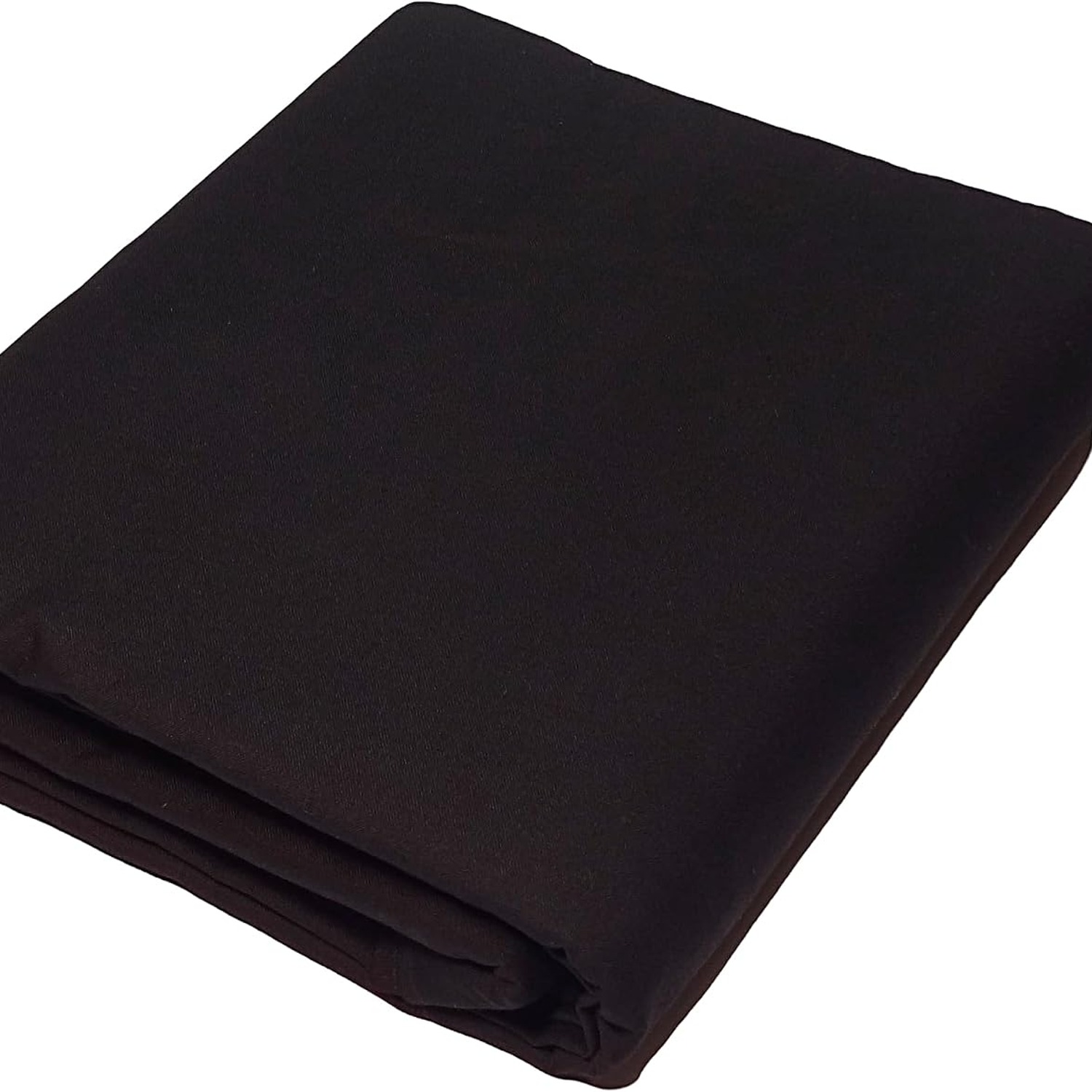
This polycotton fabric is listed for dressmaking, sheeting, crafts, quilting and home textiles. It has a solid black colour and a plain weave. The product option is described as 1 metre, with fabric supplied in a cut-by-the-metre format.
There is one important point to settle before ordering.
What this fabric offers
Polycotton combines polyester and cotton. It is not the same as pure cotton, so do not assume that advice for an all-cotton pattern will carry over without checking. The maker describes this material as poplin, while the structured product details identify a plain weave.
A solid colour gives you room to focus on the shape of the finished item. There is no printed motif to place across a seam or centre on a panel. That can simplify the planning stage, though grain direction and accurate cutting still matter.
Black also leaves stitching and added details visible. If you plan to use contrasting thread, trims or patchwork pieces, consider how they will look against the base. For a quieter finish, compare your thread beside the actual fabric rather than choosing from a screen image.
Understand the size information first
The product name points to a 1 metre option. Elsewhere, the maker lists an item length of 94 inches and dimensions of 2.39 by 2.39 metres. Those entries do not establish a clear, consistent cut size.
Do not treat 2.39 by 2.39 metres as a promise of the piece you will receive. Ask for the actual cut length and width.
This is especially important for large projects. A sheet, table covering or broad panel may depend on having enough width to avoid a join. If that is your goal, check usable width after allowing for edges and hems, not just a headline measurement.
For orders of more than one unit, ask whether the fabric will arrive in a continuous length. The maker does not say. Two separate cuts cannot always replace one long piece in a pattern layout.
How to work out how much you need
Start with your pattern's fabric allowance and the width used to calculate it.
For a project without a pattern, sketch the finished pieces and add room for seams, hems and any folds. Include all panels, not just the largest one. Then consider how those shapes will fit across the fabric without changing the required grain direction.
Keep a little space in your plan for testing. A small offcut lets you check washing, stitches and pressing before working on the main piece. It is easier to adjust a plan at this stage than to discover a problem after every panel has been cut.
Choosing it for dressmaking
Polycotton dressmaking fabric may be worth considering when your pattern calls for a suitable woven material. The listed uses include dressmaking, but that broad label does not mean it suits every garment.
Look at what the pattern needs. Does the design depend on stretch? Does it need a fluid drape, a firm shape or full coverage? Stretch, opacity and fabric weight per square metre are not specified for this product, so those questions need checking.
If possible, assess a piece in the way you plan to wear it. Hold it against the intended background and fold it into several layers. Sew a test seam and see how it sits. These simple checks are more useful than guessing from the word “poplin” alone.
A trial section also gives you a chance to compare seam finishes. Follow your pattern's guidance and choose a finish that works with the actual fabric in hand.
Planning sheeting and home textiles
Extra wide sheeting fabric can be useful when a project calls for broad panels.
Measure the item you want to cover and decide how much overhang, tuck or hem allowance you need. A finished measurement is not the same as a cutting measurement. Corners, seams and folded edges all use fabric.
Care deserves equal attention. This product is marked hand wash only. If you want a household item that can go through frequent machine washes, that instruction may make it a poor match for your routine.
For decorative home textiles, also check coverage against the surface underneath. The maker does not state how opaque the fabric is. Testing it in the intended setting will help you decide whether a lining or a different material is needed.
Using it for crafts and quilting
Plain black craft fabric gives you a neutral base for projects where other details do the visual work. The listed craft and quilting uses make this material an option to consider, but each technique brings its own requirements.
For patchwork, compare it with the other fabrics before cutting a full set of pieces. Different care needs can complicate a finished quilt. Think about how the whole item will be washed, not just how the fabrics look together on the table.
For stitched crafts, use an offcut to check needle holes, thread tension and seam appearance. If your project involves glue, paint or printing, test that process separately. The maker's description does not confirm results for those treatments.
Avoid treating general craft suitability as a safety claim. The maker does not establish performance for medical barriers, protective clothing or other safety-critical uses.
Prepare before you cut
Read any care information supplied with the fabric when it arrives. Check that the piece matches your order, then measure it before washing or cutting. If something is unclear, resolve it while the material is still untouched.
The stated instruction is hand wash only. Begin with a small test piece if you need to assess how the fabric responds. Measure that piece before washing and again after it has dried so you can spot any change.
A shrinkage rate is not given by the maker, so allow your own test to guide preparation. Do not assume the fabric will stay exactly the same size, and do not invent a shrinkage allowance based on another fabric you have used.
Once prepared, lay the material flat and check your layout again. Keep the pattern's grain markings aligned as directed. Careful preparation is useful even when there is no print to match.
Sewing and pressing with fewer surprises
Before sewing the main pieces, make a sample with the same number of layers your project will use. A simple seam test can show whether your current machine settings need attention. Follow your machine and pattern guidance when making adjustments.
Try any visible topstitching on the sample too. Black fabric can make thread choice and stitch placement easy to notice, especially with a contrasting colour. Taking a few minutes here can save unpicking later.
The maker does not give an ironing temperature. Check the supplied label rather than assuming a setting from the fabric name. Test cautiously on an offcut before pressing a finished panel.
Keep useful scraps until the project is complete. They can help with later tests, small repairs or checking a cleaning method without risking the finished item.
Buying fabric as a gift
Fabric can be a thoughtful gift for someone who already enjoys sewing. A plain black option leaves the project choice open, but it still helps to know what the recipient likes to make.
Ask whether they use polycotton and whether hand-wash fabric fits their usual work. Someone making washable household basics may have different needs from a person sewing small decorative crafts.
Size matters for gifting too. A useful length is one that fits a real project, not simply one that looks generous in a photograph.
The short version
This is solid black, plain-weave polycotton, listed for a range of sewing and textile projects. It is a candidate for dressmaking, crafts, quilting and sheeting when its properties match your plan.
Then check the hand-wash requirement against the finished item's needs. A small preparation and sewing test will help you decide how to use the fabric with confidence.