
The complete guide
Choosing a Cotton Fat Quarter Bundle for Your Next Sewing Project
Start with the project, not a pile of fabric
Choosing fabric can take longer than the sewing itself. You find one print you like, then spend time looking for others to sit beside it. Buying full lengths for a small patchwork project can also leave you with more fabric than you need.
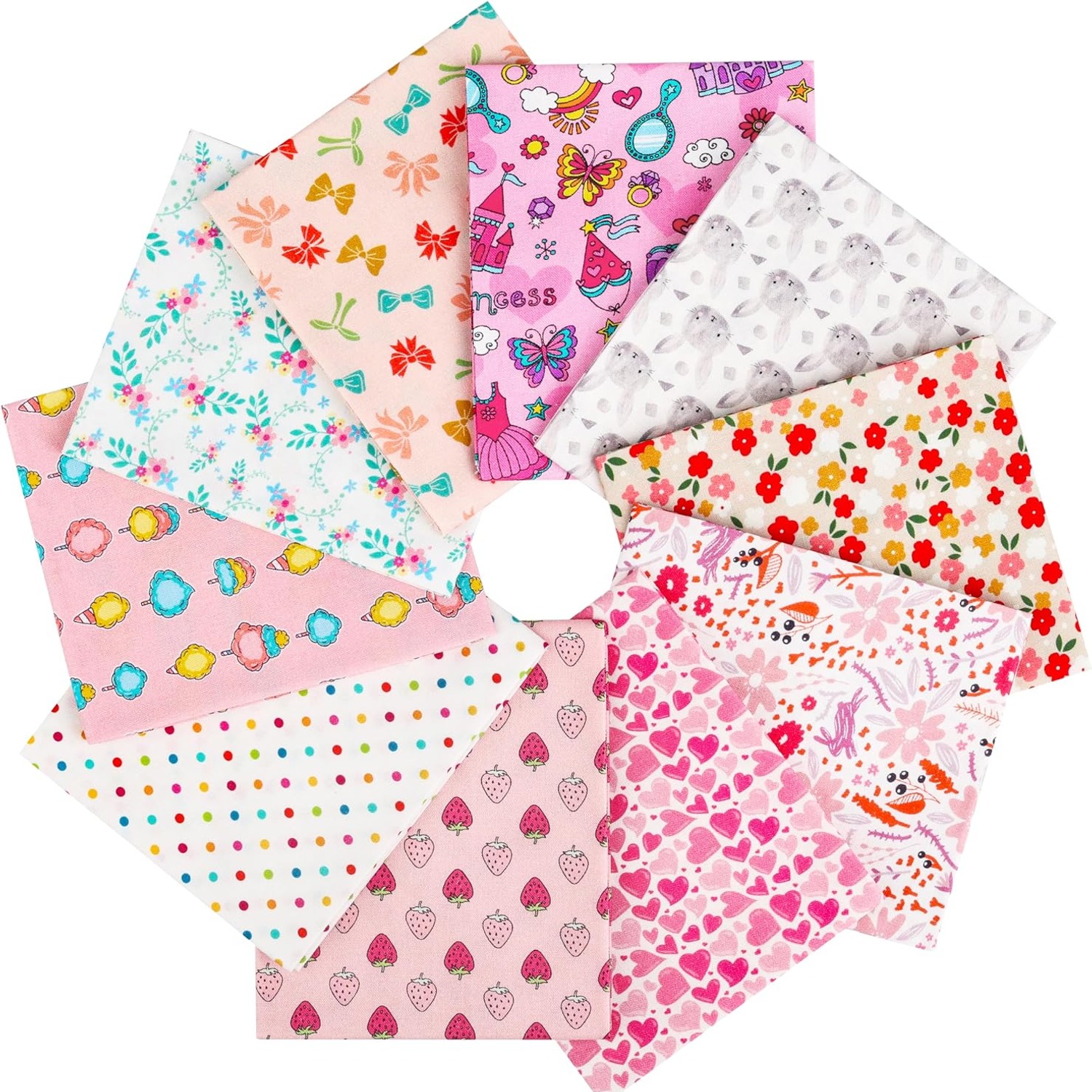
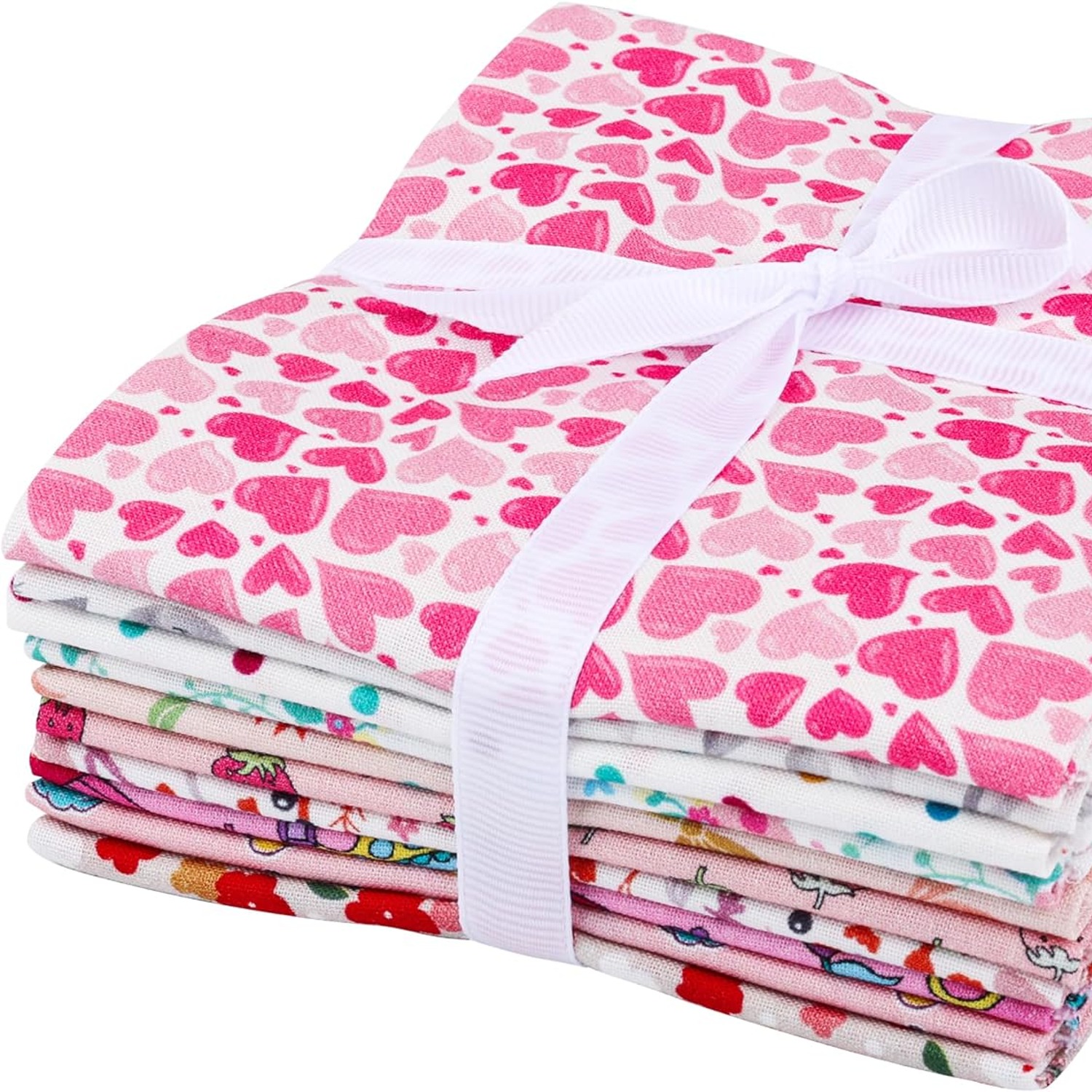
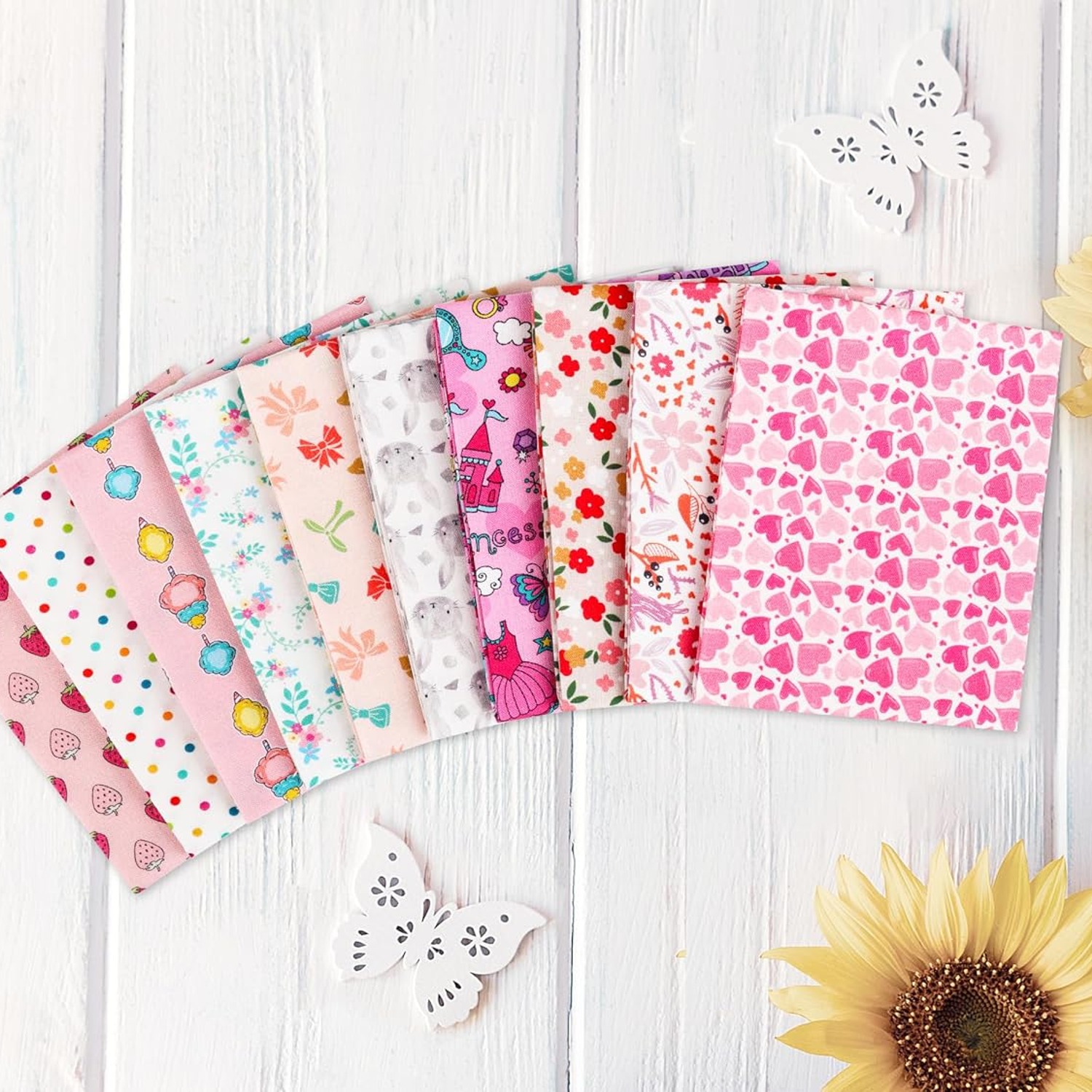
A fat quarter bundle offers a different starting point. You get several precut pieces to lay out together, rather than choosing every fabric from scratch. This pack contains ten designs, one piece of each, for quilting, sewing and craft work.
It is still worth starting with a plan. A bundle gives you choices, but it does not tell you how much fabric your finished project needs. Before ordering, decide whether you want to make a few quilt blocks, a small bag or a pieced cushion panel. That decision will help you judge whether these pieces fit.
What is in this bundle?
The pack contains ten cotton fat quarters. Each piece is listed as 18 x 21 inches. The metric dimensions are recorded as 53.3 x 45.7 cm, which lists the longer side first.
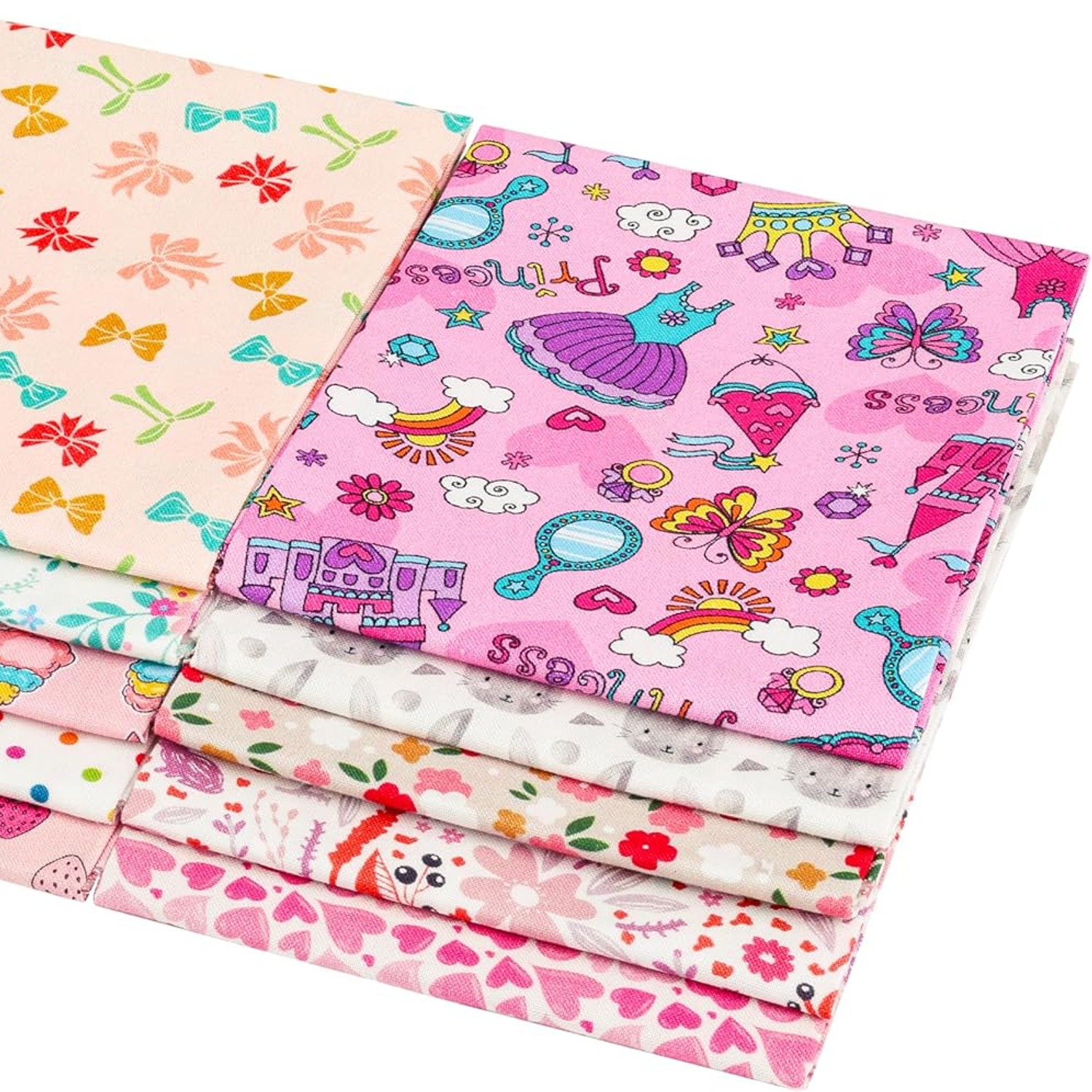
The option is called GIRLS, and the pattern is recorded as Nature. Those names do not provide a full list of colours or motifs. Look at the product images to judge the prints rather than assuming the option name describes every piece.
The fabric is described as 100% cotton with a plain weave. Its listed fabric weight is 145 g/m², described by the maker as medium weight. That figure refers to fabric weight per area, not the weight of each fat quarter.
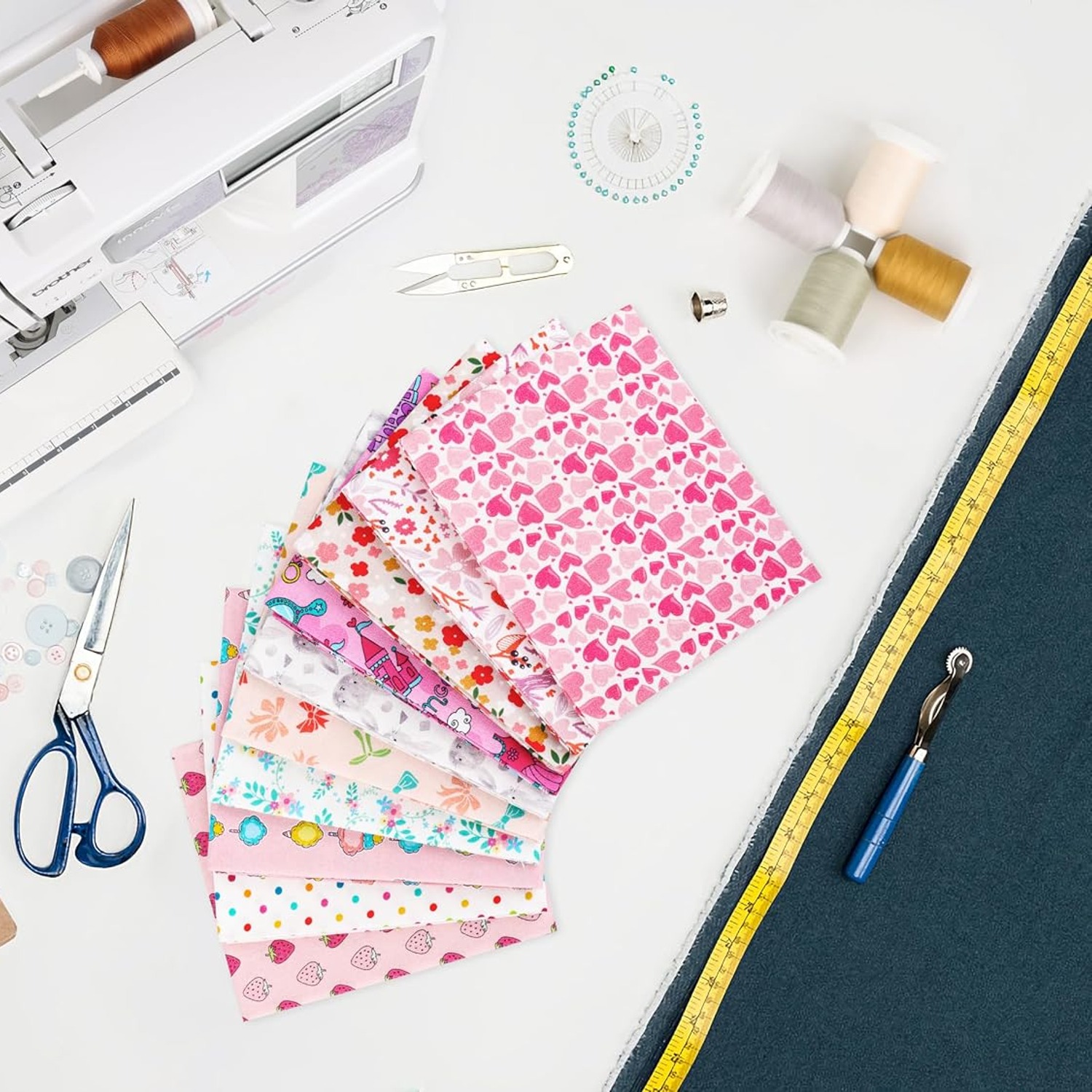
This is a quilting fabric assortment. Sewing tools, a pattern, batting and backing are not listed as included. If you are starting from scratch, add those needs to your project list rather than treating the bundle as a complete kit.
How precut fabric helps with planning
Precut quilting fabric gives you a known starting shape. Instead of working around a large length of cloth, you can set one piece on your cutting surface and map out the shapes you need.
That is helpful when trying a block design. Lay the uncut fabrics beside each other first, then decide where each print should go. A photo of the layout can help you remember your choices once cutting begins.
The precut size does not remove the need to measure. Edges may need tidying, and any washing should happen before final precision cuts if that is how you prepare your fabric. Measure the usable area rather than relying only on the listed size.
Keep in mind that a fat quarter is not a long strip. A pattern that needs one continuous length may not suit these cuts, even if the total fabric area seems enough. Shape matters as much as quantity.
Is it a good fit for a beginner?
Fat quarters for beginners make sense when the project is small and the instructions are clear. Having ten prints to choose from can make the design stage enjoyable without needing to build a large fabric collection.
A simple patchwork panel is one possible starting point. Use a pattern with clear cutting sizes, and check how many pieces it requires from each print. Mark those needs on paper before touching the fabric.
If you are still learning to cut accurately, practise on an offcut or spare fabric first. The same applies to seam allowances. A small change repeated across several seams can affect how the final pieces line up.
The bundle is also an option for more experienced sewers who want fabric for small sewing projects. The useful question is not your skill level alone. It is whether your planned cuts fit inside the available rectangles.
Choosing fabric for quilt blocks
For quilt blocks, start with the pattern's cutting list. Note the size of every shape and how often it appears. Then work out which shapes can come from each fat quarter.
Pay attention to the difference between a cut size and a finished size. Fabric disappears into seams, so a square cut to one measurement will be smaller once sewn into a block. Follow the pattern rather than guessing from the finished quilt size.
A quilting fabric assortment can give you variation across a set of blocks. You might spread the prints through the design or repeat selected combinations. Lay out a few options before settling on one.
Ten fat quarters do not automatically make a complete quilt. You may need background fabric, borders, binding and backing. Checking those requirements early is much easier than finding out halfway through the work.
Think beyond quilts
The maker lists bags, cushion covers, doll costumes and other sewing projects among the possible uses. These are ideas to check against a pattern, not a promise that every design will fit within one piece.
For a cushion cover, compare the required panel size with the fat-quarter dimensions. You may need a patchwork front and a separate backing. Include seam allowances, closures and any overlap in your calculation.
When choosing fabric for handmade bags, look at the whole construction. A cotton outer panel may need lining or interfacing, depending on the pattern. The bundle supplies fabric choices, not those extra parts.
Fabric for doll clothes calls for a different check. Small pattern pieces may fit well, but the print scale can change how the finished garment looks. Place a paper pattern piece over the fabric to see which part of the design will show.
Using the fabric for embroidery
Machine embroidery is a listed use for this cotton fabric. Before starting a larger design, test the stitch settings on a small piece with the stabiliser you plan to use.
The print matters here too. Dense embroidery may hide much of the fabric pattern, while a small motif may sit beside it. Think about whether the fabric should be the main feature or the background.
Choose thread colours while looking at the actual cloth. Screen images are useful for shopping, but your final stitching decisions are better made with the materials in front of you.
If your embroidery is part of a bag or cushion, plan the order of work. It may be easier to stitch a flat panel before assembly. Follow your project instructions and leave enough surrounding fabric for handling.
How to judge the prints
A patchwork fabric bundle is easier to assess when you imagine the prints in their finished positions. A design that looks busy as a whole fat quarter may look quite different once cut into a small square.
Look for contrast between neighbouring pieces. If two prints look similar from a distance, the seam between them may be less clear. That can be useful for a soft effect, but less useful if you want a block shape to stand out.
You do not have to use every print in one project. Choose the ones that suit your plan and keep the rest for later work. Small leftover pieces can also help with testing stitches before sewing the main panels.
For patchwork gift ideas, consider the recipient's taste rather than relying on the collection name. A fabric gift is most useful when its colours, print style and piece size match the sewing someone enjoys.
Preparing and caring for the cotton
The product care instruction is hand wash only. Do not assume that all quilting cotton has the same care requirements or that this bundle supports machine washing.
The maker describes low shrinkage, but no measured shrinkage rate is given. If accurate finished dimensions matter, allow for possible change and check the fabric after preparation before making final cuts.
Test a small area before washing the whole set. Handle raw edges gently, and let the pieces dry fully before storage. Washing can affect the usable edge, so leave yourself room to check and tidy it.
Once the fabric becomes part of a finished item, consider every material used. Lining, thread, interfacing and decorative parts may have their own needs. Choose compatible materials where possible and keep a note of the care instruction.
Check the practical details before ordering
Count the pieces your pattern needs, not just the number of designs you would like. If one print must appear many times, a single fat quarter of that design may not be enough.
This pack contains one piece of each design. Do not assume that buying another bundle guarantees an exact print match without checking the available information first. That matters when a project depends on repeated fabric across a larger area.
Check our delivery details for your location, especially if the project is intended for a birthday, class or other fixed date.
Read the return policy before washing or cutting. Keeping the fabric unchanged while you check it against your plan leaves you in a better position to ask for help if it is not suitable.
The short version
This fat quarter bundle offers ten designs in 100% cotton plain-weave fabric. Each piece is listed as 18 x 21 inches, making the pack worth considering for quilt blocks, patchwork panels and smaller sewing projects.
Choose it by matching your cutting list to the piece sizes and checking the prints in the images. Plan any extra materials, follow the hand-wash instruction and make your final measurements before cutting. A little planning at the start leaves more time for the part you bought the fabric for: making something.